
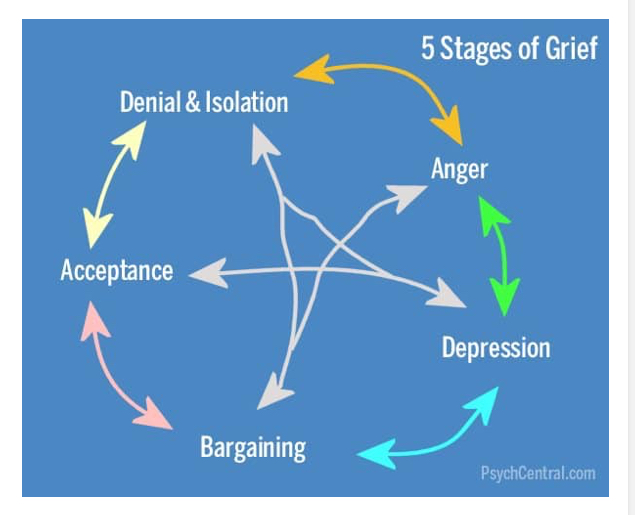
The five stages – denial, anger, bargaining, depression, and acceptance – are a part of the framework that makes up our learning to live with the one we lost. They are tools to help us frame and identify what we may be feeling. But they are not stops on some linear timeline in grief.
Elisabeth Kubler-Ross
We, as a community, suffered a huge loss in the May 6-7 fire(s). Some individuals in the community suffered more than others and the process to “keep moving” invalidated their legitimate feelings of the experience. THE TOLL IS VISIBLE.
Grief is a process – no one can decide how it impacts another. It is individual. We know there are supports for those who are able to see what they are experiencing – but not everyone relates the feelings with the source. Not everyone is able to relate the loss of a building and “stuff” to something that would trigger a grief process, but this is well documented.
When doing research on this connection I found an article on the effects of the Fort McMurray wildfires on students – some of the information of this study can directly apply to the students, teachers and staff in this situation. Sadly, no one wanted to look at this issue during our process to get to our current location.
Using the fire impact information, coupled with the community responses that have been well documented during other Pupil Accommodation Reviews, the indications are that a PAR is heavily impacted by the grief process. The responses from our community reflect the levels of grief we are experiencing – denial, anger, bargaining, depression…. but the TIMING of the experience in a modified PAR indicate that very few of us will actually get to “acceptance” by the time the Trustees vote. The mental health impact will be the legacy of this Board of Trustees.
 YM Parent Advocacy 2019-2020